
Description
When a patient starts home oxygen therapy, the nasal cannula is almost always the first delivery device they use — and for good reason. It is lightweight, simple, requires no fitting adjustment from a caregiver, and allows the patient to live as normally as possible while receiving oxygen. At Choice Bangla, Oxygen Cylinder Nasal Cannula price in Bangladesh starts from ৳150 for adult size, with all three sizes — adult, pediatric, and neonate — available for home delivery in Dhaka. Call 01308804911.
What a nasal cannula actually is — and how it works
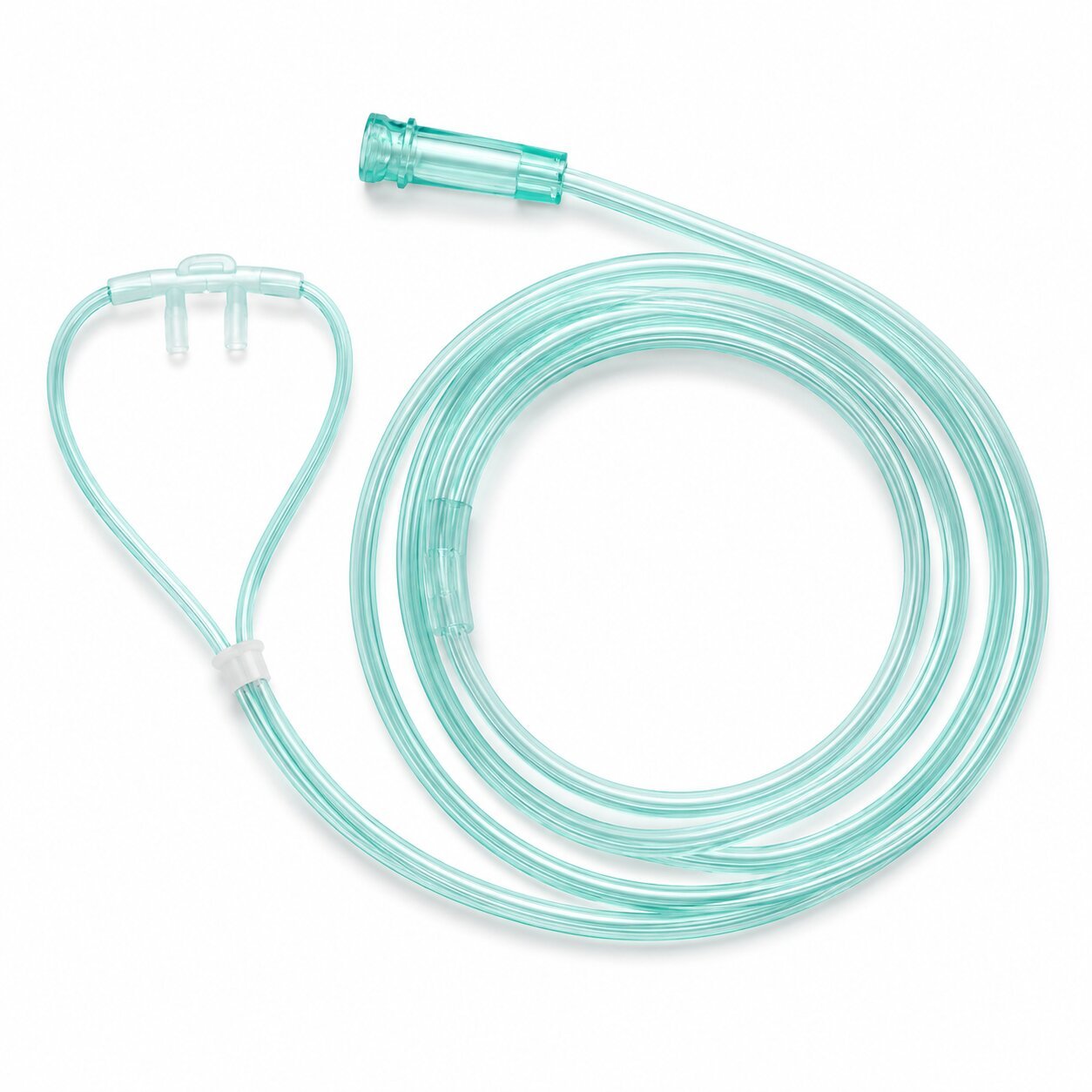
A nasal cannula is a thin, flexible tube made from soft medical-grade PVC with two small curved prongs at one end that sit just inside the nostrils. The other end connects to the oxygen flow meter outlet via a universal barb connector. Oxygen flows from the cylinder through the tubing, into the prongs, and directly into the patient’s nasal passages.
The twin-bore design — two separate channels running through the tubing — ensures equal oxygen volume reaches both nostrils simultaneously. This matters because unequal flow causes one nostril to receive more oxygen than the other, which is both inefficient and uncomfortable over extended use.
The tubing is crush-resistant, meaning it does not interrupt oxygen flow when bent, sat on, or twisted during normal movement. For a patient who moves around the home while on oxygen, this is a practical necessity.
Standard cannula vs high-flow nasal cannula — the difference nobody explains
This is a distinction that matters and that no competitor in Bangladesh addresses clearly.
Standard nasal cannula (৳100–200): Works at 1–6 liters per minute. This covers the vast majority of home care situations — COPD patients on 1–2 LPM, post-surgery patients on 2–3 LPM, elderly patients on 1–2 LPM. The prongs are small, soft, and designed for comfort during extended wear. At flow rates above 6 LPM, standard cannulas become less effective and noticeably uncomfortable — the high gas velocity causes nasal dryness and irritation.
High-flow nasal cannula (৳300–500): Designed for flow rates up to 60 LPM in clinical settings, or 6–15 LPM in home care applications. Uses wider-bore prongs and heated humidified oxygen delivery in hospital settings. For home care in Bangladesh, high-flow cannulas are used when the patient needs more oxygen than a standard cannula can comfortably deliver but does not want to use a face mask. Less common in home care but important in clinic and ward settings.
For most home care patients prescribed 1–4 LPM, the standard cannula at ৳100–200 is the right choice.
When to use a nasal cannula vs a face mask
Both deliver oxygen from a cylinder or concentrator. The choice depends on the patient’s situation and the prescribed flow rate.
Use a nasal cannula when: The prescribed flow rate is 1–6 LPM. The patient breathes primarily through the nose. Comfort and mobility during daily activity are priorities — eating, drinking, and talking are all possible with a cannula in place. Long-duration continuous use — a cannula is significantly more comfortable than a mask for extended daily wear. The patient needs to sleep with oxygen — most patients find a cannula far more tolerable overnight than a mask.
Switch to a face mask when: The prescribed flow rate exceeds 6 LPM — a standard cannula cannot deliver this efficiently. The patient breathes predominantly through the mouth — a cannula only covers the nose. The patient has nasal obstruction or significant nasal bridge soreness from extended cannula use. The doctor has specifically prescribed mask delivery for a medical reason.
Many home care setups use both — a cannula for general daily use and a simple face mask for periods of higher oxygen need.
How to position nasal prongs correctly
Incorrect prong positioning is surprisingly common, and it directly reduces the effectiveness of oxygen delivery.
The two curved prongs should curve downward and sit just inside the nostrils — not pressed flat against the nostrils and not pushed deep into the nasal passage. The curve of the prong should follow the natural curve of the nostril entrance. The tubing rests over the ears and under the chin, with the adjuster pulled up to sit snugly but not tightly under the chin. The tubing should not pull on the ears.
Check that both prongs are centered in their respective nostrils — a prong that has shifted to one side blocks one nostril and reduces effective oxygen delivery. This is worth checking after the patient changes position or after sleep.
Skin irritation from extended cannula use — how to prevent it
For patients using a nasal cannula for many hours daily, two types of skin irritation are common: soreness behind the ears from the tubing resting on the skin, and nasal bridge or nostril soreness from the prong contact.
For ear soreness: Wrap the tubing where it rests on the ear with soft medical foam tape, or use a cannula holder that clips to clothing and takes the weight off the ears. Replace every 2–7 days regardless of appearance — even if the cannula looks clean, biofilm builds up on the tubing surface.
For nasal soreness: Use a thin layer of water-based moisture barrier cream inside the nostril entrance. Do not use petroleum-based products — petroleum products are flammable in the presence of oxygen and should never be applied near a patient receiving oxygen therapy.
For general comfort: Ensure the chin adjuster is not too tight. The tubing should rest comfortably, not pull. Consider a softer-prong cannula if the standard model causes discomfort — these are available at Choice Bangla on request.
Size selection — adult, pediatric, or neonate
Adult cannula: For patients 12 years and above. Standard prong size fits most adult nostrils comfortably. Available at ৳100–200.
Pediatric/child cannula: For children 2–12 years. Smaller prong diameter and shorter prong length for anatomically appropriate fit. Forcing an adult cannula onto a child causes discomfort and reduces effectiveness. Available at ৳150–250.
Neonate cannula: For infants under 2 years. Extremely small, soft prongs designed for newborn and infant nasal anatomy. Used in NICU and home care for premature or oxygen-dependent infants. Available at ৳200–300.
Confirm the patient’s age group before ordering. If uncertain, call Choice Bangla on 01308804911 and we will confirm the right size.
Replacement schedule — what nobody tells buyers
A nasal cannula is a disposable device. Using one past its safe duration creates hygiene and effectiveness problems that are avoidable at very low cost.
Minimum replacement schedule: Active daily use (8+ hours/day) — replace every 2–3 days. Moderate use (4–8 hours/day) — replace every 5–7 days. Occasional use — replace when visibly soiled, kinked, or after any illness episode.
Replace immediately when: The tubing kinks and does not return to its original shape. The nasal prongs bend out of their correct curved position. The connector loosens at the flow meter connection. There is visible discolouration inside the tubing. The patient has had a respiratory infection — do not continue with the same cannula after any illness.
At ৳100–200 per unit, regular replacement is genuinely inexpensive. Using the same cannula for weeks or months to save money is a false economy.
Why Choice Bangla
All three sizes in stock — adult, pediatric, neonate. EO sterilized, latex-free, medical-grade PVC. Free delivery in Dhaka within 2 hours, 24/7.
● Nasal cannulas from ৳150
● Adult, pediatric, and neonate sizes
● EO sterilized, latex-free, crush-resistant tubing
● Free home delivery in Dhaka (2 hours)
● Available 24/7 including nights
● Cash on delivery
● Bulk orders for clinics and nursing homes — call 01308804911
Frequently asked questions
What is the oxygen cylinder nasal cannula price in Bangladesh? From ৳100 (adult standard) to ৳300 (neonate) at Choice Bangla. Free delivery in Dhaka. Call 01308804911.
What is the difference between a standard and high-flow nasal cannula? Standard cannula works at 1–6 LPM, designed for home care comfort. High-flow cannula works at 6–60 LPM, used in clinical settings or when higher home care flow rates are needed. Most home care patients need a standard cannula.
How often should I replace a nasal cannula? Every 2–3 days for daily use of 8+ hours, or every 5–7 days for moderate use. Replace immediately after any illness or if tubing kinks or prongs bend.
Which size cannula should I use for a child? Children 2–12 years — pediatric size. Infants under 2 years — neonate size. Adults and patients 12+ — adult size. Call 01308804911 to confirm if uncertain.
Can a patient eat and drink while wearing a nasal cannula? Yes — this is one of the main advantages of a cannula over a face mask. Eating, drinking, and talking are all possible with a cannula in place.
Can petroleum jelly be applied near the nasal prongs for comfort? No — petroleum-based products are flammable in the presence of oxygen. Use water-based moisture barrier cream only.
How fast is delivery in Dhaka? Within 2 hours. Available 24/7. Call 01308804911.
Call Choice Bangla: 01308804911 choicebangla.com | Nasal cannulas from ৳100 | All sizes | Free delivery Dhaka | 24/7
 Monthly Oxygen Cylinder Rent Price in Dhaka
Reviews
There are no reviews yet.